London to Canterbury

Time to hit the road

134kms – 6 days

On Monday 1st July I walked out of my front door in Stoke Newington, London, closing it behind me like it was any other, normal, day. But it wasn’t a normal day. I wasn’t just nipping to the shops for some milk, or walking to my nearest bus stop. I was closing the front door behind me and walking to Rome. It was a strange feeling, and a private one at that. Nobody that I passed on the street knew of the kilometres that lay ahead of me, of the months of walking, and of the (literal) ups and downs that were to come.

Ready and raring to go

The vast majority of my route to Rome will follow the Via Francigena, a medieval pilgrimage trail that starts at Canterbury Cathedral. How I would chose to get myself from Stoke Newington to Canterbury was, however, entirely up to me. The extra 134 kilometers are my own optional extra, and there’s no ready made route that will deliver me door to door. After some deliberation I decided to try and walk through the London that I know, the London where I’ve lived, worked, and revelled for the last 11 years.

In no time I found my rhythm and was striding out. Stoke Newington turned into Dalston, which turned into Shoreditch, which turned into the City. And before I knew it I had reached the River Thames. Leaving the familiar territory of all things north of the river behind, I ventured into lands unknown. The sprawling Borough of Southwark, and its many hills, felt to be never ending in the absence of familiar landmarks to help me track my progress. And then I saw it, the fake Eiffel Tower that is the Crystal Palace Trasmitting Station, marking my stopping point for the night.
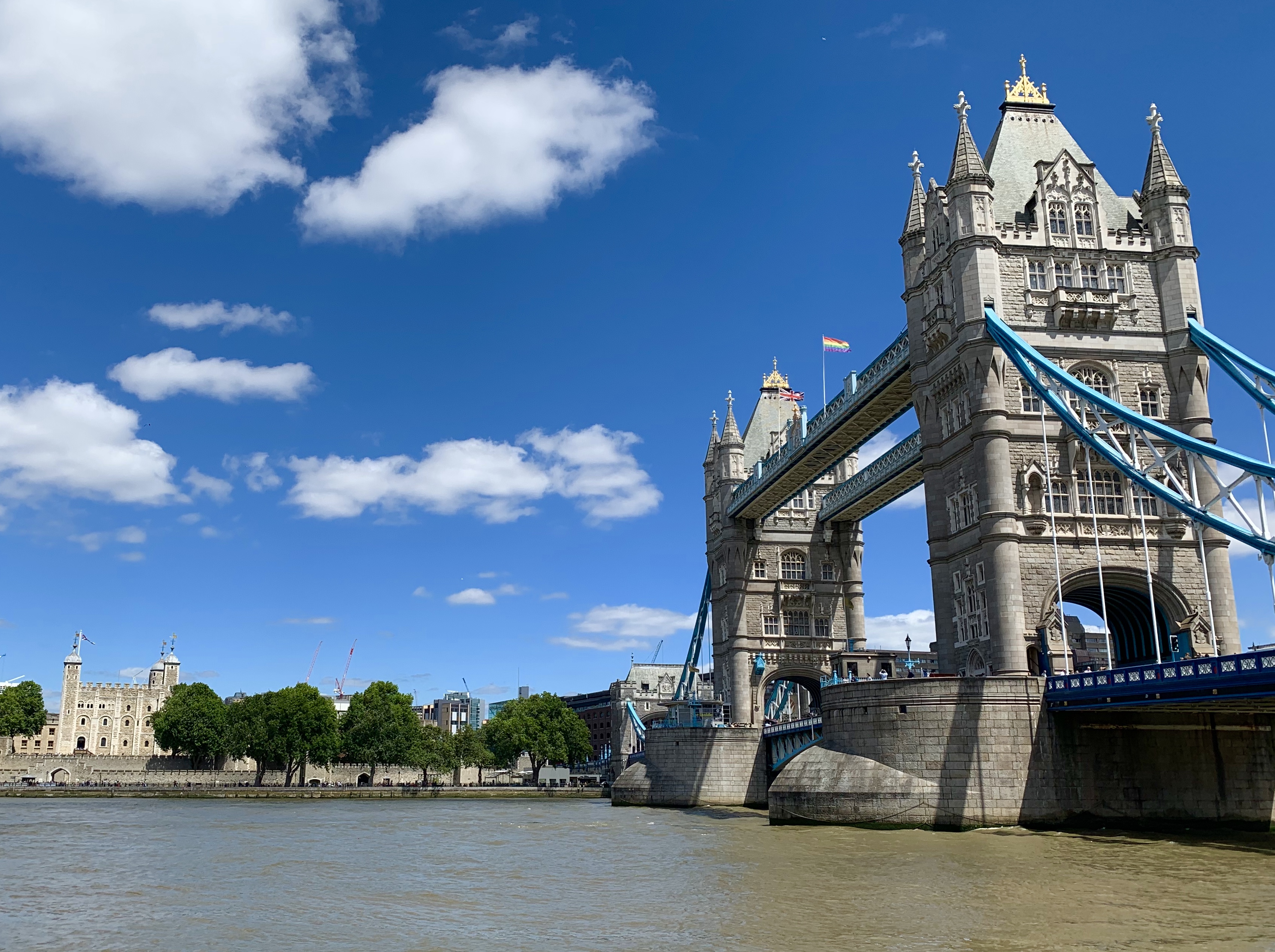
Continuing the journey south of the River Thames and looking back on Tower Bridge and the Tower of London

I feared a long and monotonous walk out of London’s suburbs, but I found myself in fields full of wheat and quaint little villages far sooner than I anticipated. Unexpected finds included the Wilberforce Seat, where in 1788 William Wilberforce vowed to abolish the slave trade, and a sundial in the small parish church of St. Mary the Virgin in Downe that’s dedicated to Charles Darwin, who lived in the village for 40 years.

Crossing the M25, Greater London’s busy ring road, was something of a landmark moment. I crossed over the motorway and immediately snaked through a dense forest, where I heard a rustling and noticed a deer watching me from only a few metres away. We held each others’ gaze for what felt like a lifetime, before it ran off and I carried on walking towards the clearing. As I emerged into the bright light of day, Kent, the Garden of England, stretched out in front of me. All I could see were fields of crops, horses grazing, and traditional oast houses dotting the landscape. London was well and truly behind me.

Kent, the Garden of England, stretching out in front of me after crossing the M25

The next few days developed a pattern of their own – following a mixture of the North Downs Way and the Pilgrims Way, passing through picturesque villages steeped in thousands of years of history (Otford, Aylesford, and Charing being amongst my favourites), and traversing fields bursting with crops and colour-popping with wild flowers. The further east I walked, the more I stumbled upon enormous manor houses, and the more striking the landscape seemed to become, dotted with vineyards and orchards as I edged closer to Canterbury.
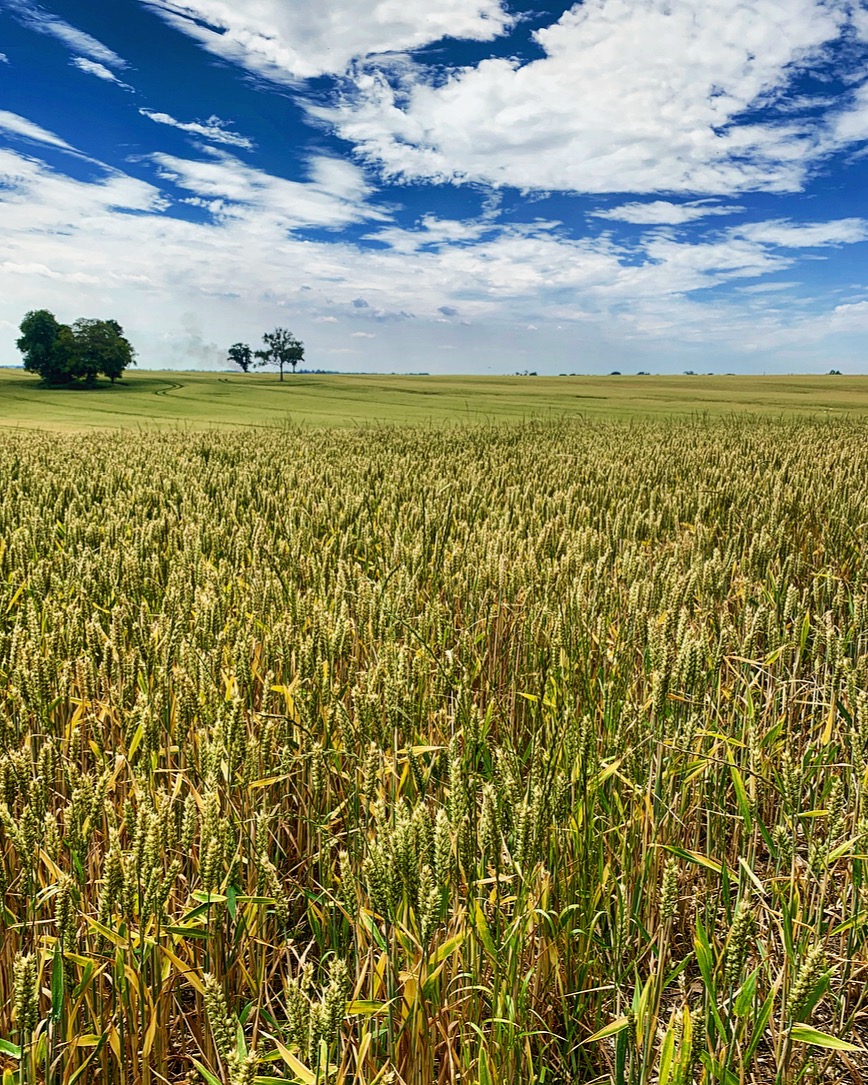
Colourful corn fields
Walking through Kent’s thriving vineyards

Arriving in to Canterbury had something of a surreal feel – I had reached the end point, but the end point of the beginning. I was crossing a finish line, however it was only momentary. As I walked through the cobbled streets of the historic city, crossing bridges under which tourists were merrily punted along the River Stour, the elation began to wear off and it started to sink in that my journey was really only just beginning.

I headed for Canterbury Cathedral to get my “Pilgrim’s Passport” stamped, marking the beginning of my journey to Rome. The Cathedral attendant asked me “Where are you heading, Rome?” I nodded. “All in one go?” I managed a feeble “Yes”. He handed me back my stamped passport and told me to take my time looking around the Cathedral, sending me off with a smile that was a mix of all things excitement, envy, and encouragement.
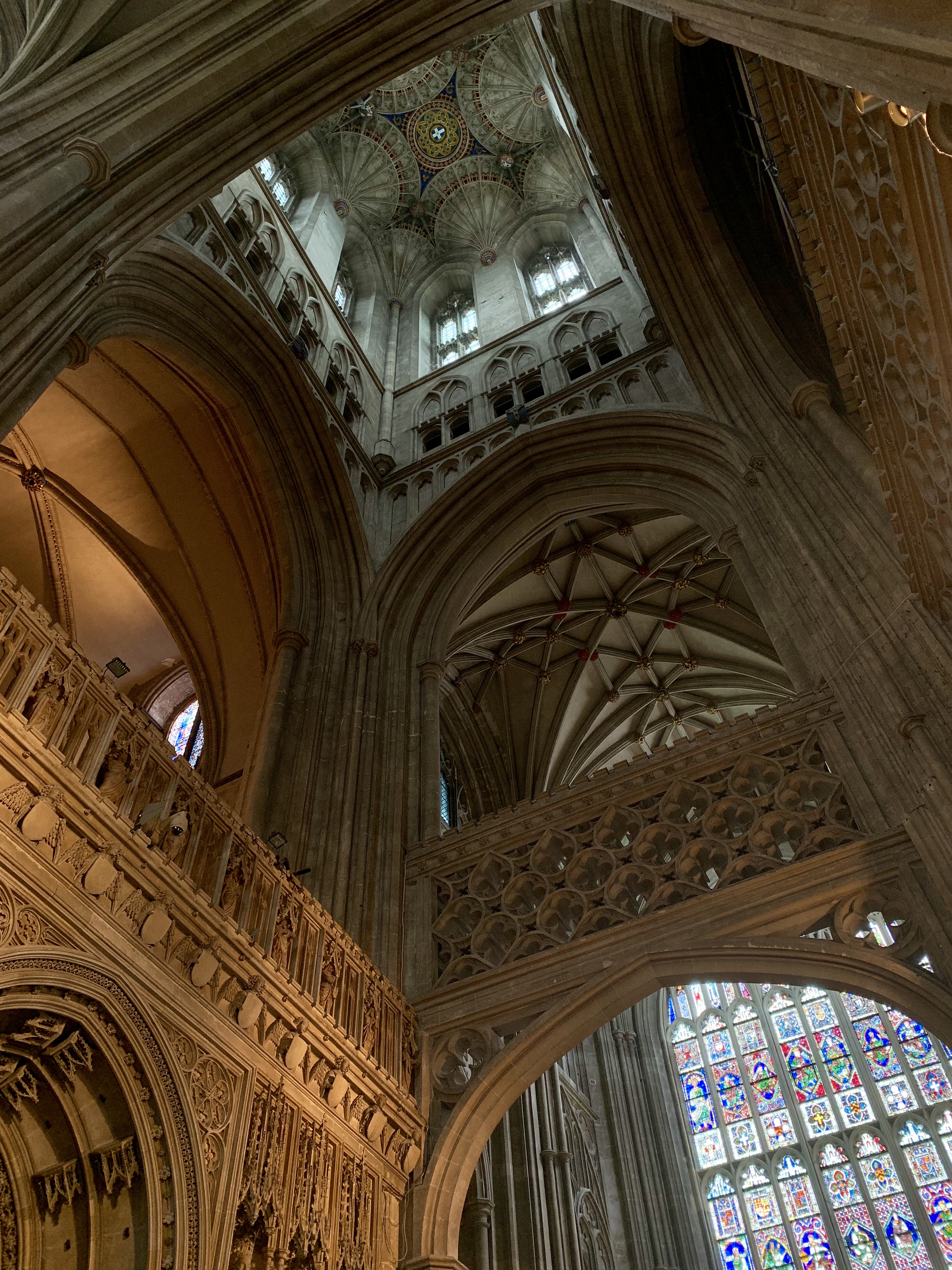
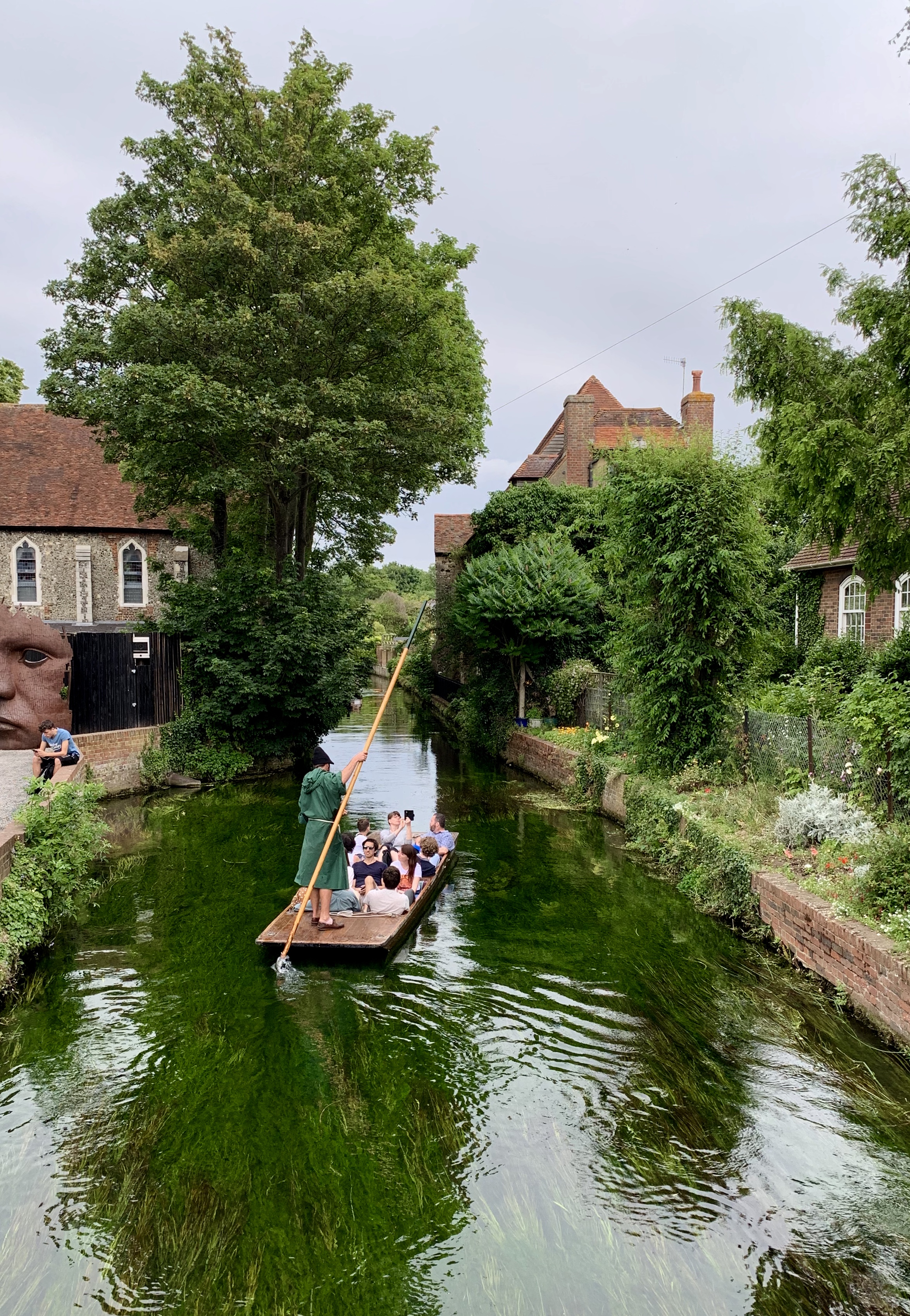
The lofty heights of Canterbury Cathedral

The quiet backwards of the River Stour

What’s in the bag?

With only a day to go before I set off on my walk to Rome, one of the questions I’ve been asked the most in the run up to D-Day is…what are you taking with you?

Packing for a long weekend away, let alone a three and a half month adventure, is challenging enough. But when everything you pack is going to be carried on your back, the ruthlessness in you comes out.

When it comes to packing, we all know that the more space you have the more things you pack. So my first, and most important, consideration was which backpack to take. I’ve used Lowe Alpine backpacks in the past when trekking in Nepal, and have always found them to be fantastic. So I opted for the Lowe Alpine AirZone Pro+ 33:40, a 33 litre backpack that can expand to 40 litres if necessary. It has a fully adjustable, breathable, back support system, plus tons of pockets and gizmos to ensure I can access extra layers or blister plasters with ease. With some help from a public vote on Instagram, she’s been christened Bonnie the Backpack.

Bonnie the Backpack, who will be with me every step of the way to Rome

Bonnie was very kindly bought for me by my wonderful friends at Estancia Los Potreros, a horse riding and working cattle ranch in Argentina where I worked for a number of months earlier this year. Their support for my walk to Rome has been both impassioned and unwavering, and I can’t thank them enough.

With my backpack sorted, my next big consideration…what should I put in it? Well, that’s proved to be something of a science, and most definitely an exercise in practicality and restraint. I’ve had a stab at packing a number of times only to realise (after picking Bonnie up and seeing how heavy she is!) that I need to start again, with more ruthlessness. Clothes that have been laid out ready to be packed have instead been folded up and put back in their drawers. If it’s not lightweight, durable, practical, and, most importantly, necessary, it’s not going in.

Nearly everyone I’ve spoken to about my walk has been disproportionately interested in the contents of my backpack, perhaps because they can’t imagine what three and a half months of your life, packed into a small space, looks like! So for those of you who have been interested in the particulars, here’s what it’s come down to…

Things I’ll walk in:

Extra layers:

  • A linen shirt, for protection from the sun
  • A jumper, kindly donated by Sweaty Betty
  • A thin insulated gillet
  • A raincoat
  • A pair of waterproof trousers

Things for the evenings and rest days:

  • A pair of lightweight baggy trousers
  • A Mind t-shirt
  • A lightweight jersey dress
  • A pair of flip flops
  • A pair of pyjamas

Other bits and bobs:

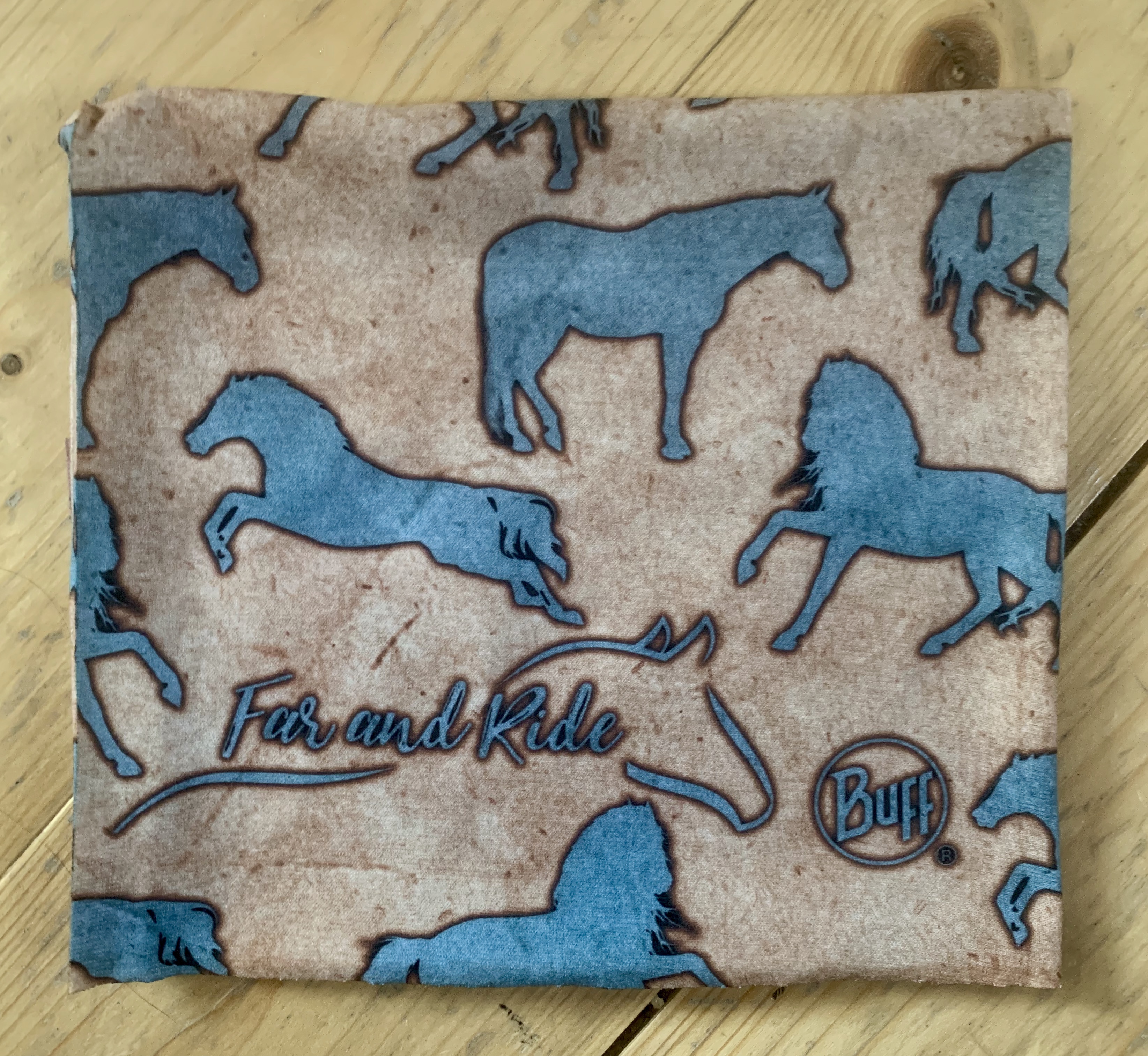
  • A Buff, kindly donated by the travel agent Far and Ride, who specialise in horse riding holidays
  • A lightweight scarf to cover my shoulders when visiting churches en route
  • A pair of walking poles
  • A pair of sunglasses
  • A sun hat
  • A bikini for soaking in the hot springs I’ll pass en route
  • A travel towel
  • A silk sleeping bag liner
  • A 1.5 litre water bladder and a 1 litre water bottle, plus an emergency collapsible 500ml water bottle
  • A head torch
  • A Swiss Army Knife
  • Gaffer tape (which can be used for so many things, from repairing clothes to holding a smashed iPhone together!)
  • Some basic toiletries, kindly donated by Lush and Neal’s Yard Remedies
  • Sunscreen
  • A bottle of travel wash
  • A first aid kit (including plenty of Compeed)
  • An iPad
  • An iPhone
  • A power bank
  • Charging cables and adapters
  • A notebook and pen
  • A French phrase book
  • My passport!

My Buff, kindly donated by Far and Ride

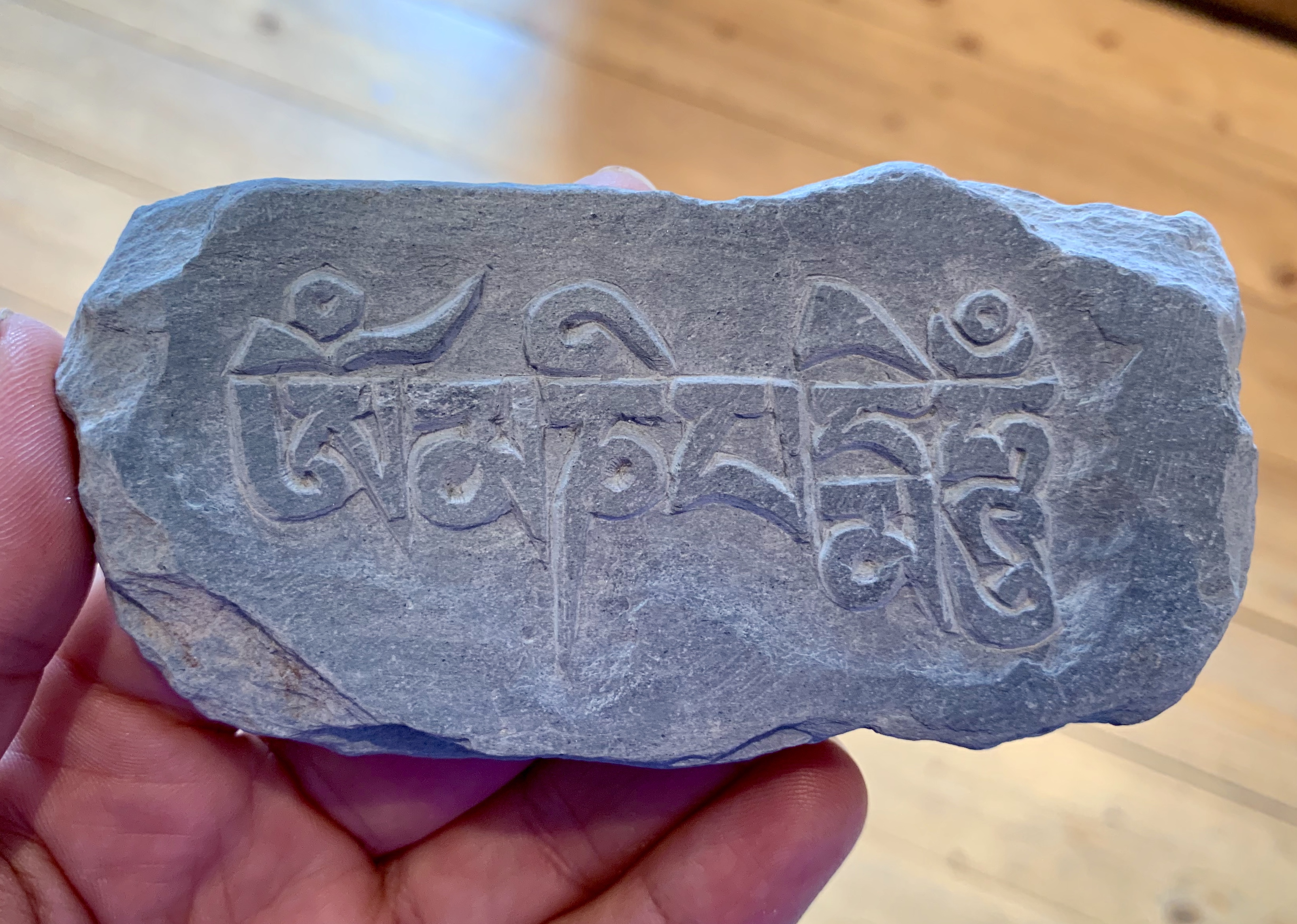
I have allowed myself one luxury item, though. A number of years ago I was travelling in Nepal and was given something called a mani stone by a Tibetan refugee, a small stone inscribed with the Buddhist mantra “Om mani padme hum”. This mantra has a number of different meanings, all of which resonate with me, but it’s also a prayer for protection for travellers. When trekking in Nepal you see piles of mani stones lining the mountain paths, placed their as offerings to the gods for the protection of all who pass them. A few years ago I actually gave that mani stone to a friend who spends a lot of his life on the road in countries far from home. So on a return trip to Nepal I acquired a new mani stone, and, call me superstitious, but I take it with me whenever I embark on a long journey. And this time around it’ll be coming with me all the way to Rome.

Perhaps it’s counterintuitive to fill my bag with rocks, but this mani stone from Nepal will be accompanying me to Rome

So that’s it…my worldly possessions for the next three and a half months. When written down it sounds like a lot, but I promise you that it’s actually very little. Isn’t it amazing, though, how little we need in life. I think that’s where much of the appeal of this walk lies for me, in stripping things back to the very basics and living simply. Like a pilgrim from the Middle Ages…except with an iPhone, high tech walking shoes, and a lifetime’s supply of blister plasters!

My bag is packed, my shoes are waiting by the door…tomorrow it’s time to start walking to Rome.